A broadband billing platform should do one thing above all: bill exactly what the network delivers. COS Systems generates invoices from live service activations, not from spreadsheets or manual reconciliation. The result is billing that matches the network state by default, for single ISPs and multi-provider networks alike.
What does a broadband billing platform do?
It automates the full billing cycle: invoice creation, payment processing, payment status, and subscriber notifications. In COS Business Engine, each of these runs from the same data model that handles orders and provisioning. When a service activates, billing starts. When it deactivates, billing stops. No timing gaps, no orphaned charges.
That coupling is the difference between a billing tool and a billing platform. A standalone tool needs to be told what happened on the network. A platform already knows.
How does multi-provider broadband billing work?
Multi-provider broadband billing means one network, several service providers, and separate money flows that must stay accurate. COS handles this at 2 levels. COS Business Engine bills subscribers across multiple services on one network: internet, phone, IPTV, security. COS Wholesale Engine handles the wholesale layer above it: wholesale broadband billing generated per ISP from live activations on open access and multi-ISP networks.
Open access operators run both flows on connected data. The network owner bills ISPs at wholesale; each ISP bills its own subscribers retail. Disputes disappear because both sides read the same activation records.
Do you need a separate telecom billing solution?
No. A separate telecom billing solution adds an integration that must be kept in sync with orders, provisioning, and support. COS builds billing into the BSS/OSS instead: the billing engine, the order flow, and the network state share one source of truth. Operators that consolidate billing into the platform remove reconciliation work and a recurring software cost. See automated billing in the COS platform.
What subscribers see
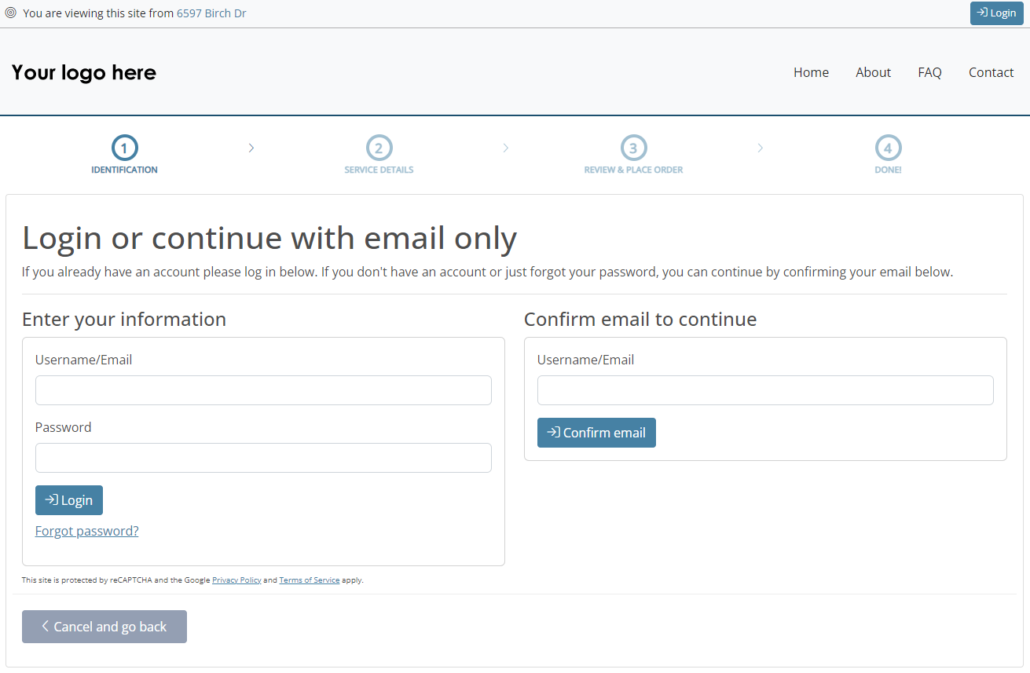
Subscribers manage billing in the customer portal: payment details, upcoming bills, payment history, and payment status. Self-service reduces support tickets and keeps payments on time. The portal carries the operator’s brand, not ours.
Frequently Asked Questions
What is a broadband billing platform?
A broadband billing platform automates invoicing, payments, and subscriber notifications for internet service providers. The defining feature is integration: billing runs from live network and order data rather than manual entry. COS Business Engine includes this as part of its BSS/OSS platform.
How is multi-provider broadband billing kept accurate?
COS generates all charges from live service activations. Subscriber billing in COS Business Engine and wholesale billing in COS Wholesale Engine read the same activation records, so retail and wholesale invoices reconcile by construction.
Can COS replace a standalone telecom billing solution?
Yes. Billing is native to COS Business Engine, covering invoice creation, payment processing, and dunning notifications. Operators replace separate billing tools and the integration overhead that comes with them.
Which business models does COS billing support?
Single-provider ISPs, multi-service networks (internet, phone, IPTV, security), and open access or wholesale networks with multiple ISPs. The same platform covers retail subscriber billing and per-ISP wholesale invoicing.