Tag Archive for: Business Engine

Posts

Nokia and COS Systems Partnership Logo

COS Systems is specializing in software to operate broadband networks open for multiple providers delivering services on a shared infrastructure. Nokia is a global leader in fixed and wireless networks and networking technologies for open network architectures, software defined networking and network slicing. After recent integration work the cooperation between the companies is now formalized as COS Systems becomes a Nokia Fixed Networks OSS Connected Partner.  

With new types of services emerging, such as telehealth, internet of things and smart services, it is becoming increasingly important to have a network open for multiple providers. Instead of building a proprietary network and trying to produce all the services current and future customers will need, it is attractive to provide a robust infrastructure and then open it up to multiple specialized providers on a wholesale basis.

“In 2014 when we established COS Systems in the United States Open Access was almost unheard of, but in just a few years this has changed dramatically. Especially municipalities are realizing that their best choice is not to become a provider of telecommunications services, but to ensure that this critical infrastructure is in place, just as with other utilities such as roads, water and electricity,” says Bjorn Wannman, Sales Manager at COS Systems.

With COS Systems heritage from Sweden, where their BSS/OSS platform COS Business Engine is used to operate more than a hundred municipal and utility fiber networks, this is not something new. For over a decade COS has enabled True Open Access Networks, where subscribers can access an online marketplace and choose freely between any type of services provided by many competing service providers. The competitive nature of the marketplace brings service innovation, increased quality, and lower prices. This is also where the partnership with Nokia comes into play. For a network deployed using Nokia Fixed Access equipment COS will be able to fully automate the subscribers’ interaction with the marketplace. As subscribers are managing their services on the marketplace, COS Business Engine will instruct Nokia’s management and control platform to instantly perform desired changes in the network.

“With the tools to simplify business and network operations, COS Systems is able to uniquely meet operator needs for network automation. With this cooperation, operators – regardless of whether they are new or existing players in the market – can easily automate the delivery of high-speed broadband services to their residential and enterprise customers. ” says Bassam El-Zakhem, Vice President, Fixed Networks Americas at Nokia.

“We’re excited to be part of Nokia’s OSS Connected Partner Program. They share our visions about open networks and what we see today is just the beginnings of what will come. Working together with a global leader such as Nokia on current and emerging Software Defined Networking and network slicing technology is thrilling. Network owners and operators working with us will know they are choosing an open and future proof solution,” says Isak Finer, CMO and VP North America at COS Systems.

“COS Systems has unique understanding and experience in the open type of networks that are becoming increasingly important. By combining the Nokia AMS and Altiplano management and control platforms with the COS Business Engine, operators can more effectively keep up with rapidly changing customer demands. We’re happy to welcome COS Systems as OSS Connected Partners,” says Bassam El-Zakhem, Vice President, Fixed Networks Americas at Nokia.

About COS Systems
COS SYSTEMS is a leading provider of software to plan, deploy and manage True Open Access fiber networks, using a powerful yet simple self-service interface. COS Systems takes customer needs and delivers innovative software solutions that streamline operations, accelerate revenue and deliver more satisfied subscribers. Learn more about COS Systems on www.cossystems.com.

For additional information contact:

Isak Finer
CMO & VP North America
COS Systems
+1 (540) 988 3224
isak.finer@cossystems.com
www.cossystems.com

Open Access featured image

Open Access featured image

Private providers just aren’t building fiber at a fast-enough pace today in the USA. Local leaders in an increasing number of communities are looking into options for how to save their residents from being left in the dark when our way of life and economy is moving online. This is especially true in rural areas where the private providers show no interest in investing since the return on investment isn’t good enough with low subscriber density and numbers. In other parts of the world publicly built fiber infrastructure is often operated with an Open Access Model and it is winning ground in the USA as well. But there is quite a lot of confusion about what the term means, so here is a walkthrough of the most common models with pros and cons of each. A hint to you who is reading this – read to the end, we save the best to last.

Introduction to Open Access

In short the Open Access model builds on the concept of layers.

  • The first layer is the Infrastructure layer, which is the conduit and physical cables that make up the network. It is also called the Passive
  • The second layer is the Operations layer, which is lighting up the physical network with electronics and making it all work. It is also called the Active
  • The third layer is the Services layer, which simply consists of all the services delivered over the network. People tend to think of the traditional Internet, Phone (VOIP) and TV (IPTV) services, but we see an increase in other services like telehealth, home security, IoT and other Smart services.

The idea is to separate these layers, so that one entity can own and maintain the Infrastructure layer and then lease it out for others to deliver services. Much like an airport works. One entity builds the airport and all the airlines pay when they use it. Imagine how ridiculous and expensive flying would be if every airline had to build their own airports! That is how telecommunications generally work today.

What people have questions about is generally the operations layer. What does it really mean? Well, let’s compare all the data flowing into and out of the network to water. If it was important to get the right stream of water to a specific house all the way from the water tower, the only practical way would be to build a separate pipe all the way to that house. That is basically what happens in the operations layer. Using controller software, you create a tunnel through the network to every single end user, in which the service is delivered. This is what every service provider does when they start up a new service, but in the scenario with a single provider they typically make no significant difference between the operations and the services layer. That separation is important when multiple service providers can have their own tunnels and you need to keep track of who has which tunnel set up.

With that introduction given it is time to start listing some of the most common Open Access models used today. Please note that there is no standardized vocabulary, which is the reason why this blog post is written in the first place! You might find other names for these models. Also, this has the outlook of a municipality building a publicly owned fiber infrastructure. The assumption is also that it’s a positive thing to give consumers multiple choices for services and providers. Private service providers are in this business to make money, which can obviously make them have a different opinion on some of this.

Dark fiber Open Access

In networks you talk about backbone, middle mile and last mile. If comparing to a road system the backbone would be the highways, connecting cities to each other. The middle mile would be all the small streets within the city, and the last mile, or the “drop”, are the driveways at peoples’ houses. Without a backbone your city would have no means of effectively reaching the rest of the world’s network and without the middle mile the houses would have nothing to connect to. In the Dark fiber model, the community is only providing the passive infrastructure layer and they allow private providers to lease access to it and use it as they wish.

Dark fiber backbone Open Access

In this model the community would pay for the highway into the city, ensuring there is capacity enough for private service providers to sell high quality services.

Pros

  • The minimum investment needed to likely improve broadband quality
  • No need for knowledge in network operations
  • No need to invest in electronics
  • Might reduce the cost enough for private providers to start investing in the community

Cons

  • There is no guarantee a provider will build out
  • If a provider builds, they will likely only build where the business case is the best and leave some residents without
  • Since the final connection to the end customers will be built by private providers, the community will have to reach agreements for using their infrastructure in order to deliver community services (smart services), which will also not reach all residents (see above).
  • Customers will in reality have no choice. The investment done by the first provider in middle mile and last mile is too much of a barrier for a new provider to come in. Overbuilding is very uncommon in fiber. The common monopolistic problems of high price and sometimes low quality are likely.

Dark fiber middle mile Open Access

The community would also build the fiber in the streets and then allow private providers to bring the electronics to light up services and build the drops to the houses.

Pros

  • With almost all of the investment done , it’s very likely private providers will start investing in the community
  • If all streets have fiber, even the weaker areas of town could be connected
  • No need for knowledge in network operations
  • No need to invest in electronics

Cons

  • The provider will likely only build to residents with stronger economy since they have profit targets to reach and don’t want customers who might be bad payers.
  • Since the final connection to the end customers will be built by private providers, the community will have to reach agreements for using their infrastructure in order to deliver community services (smart services), which will also not reach all residents (see above).
  • Customers will in reality have no choice. The investment done by the first provider in last mile is too much of a barrier for a new provider to come in. Overbuilding is very uncommon in fiber. The common monopolistic problems of high price and sometimes low quality are likely.

Dark fiber last mile Open Access

In this model the community builds all of the fiber, but they lease it to a private provider/s who would install the electronics, operate the network and sell services.

Pros

  • With all of the investment in fiber done , private providers will definitely start lighting up customers
  • If all properties have a fiber connection, even the weaker areas of town could be connected
  • No need for knowledge in network operations
  • No need to invest in electronics

Cons

  • The provider will likely only invest in and install equipment to residents with stronger economy since they have profit targets to reach and don’t want customers who might be bad payers.
  • Even though the final connection to the end customers is owned by the city, the community will still have to reach agreements for using that infrastructure in order to deliver community services (smart services), as private providers own the electronics and thereby control the network.
  • Customers will in reality have reduced choice. The investment done by the first provider in electronics to serve a specific area and investment in electronics at the customers home, will be prohibitive for a new provider to come in. The common monopolistic problems of high price and sometimes low quality are likely to still exist.
  • In order to enable multiple providers to coexist, you need multiple fibers and also enough space in huts, handholes, and such to house multiple providers electronics.
  • The total cost will be higher since electronics will not be utilized to a maximum (two providers in the same area might have their own switches, which are both not used to a maximum.

Lit Open Access – Single provider

In this model the community would build the entire fiber network and also invest in the electronics all the way to the ONT in the customers’ homes and also build up operations capacity (an alternative is to lease the network or hire a neutral operations company to light and operate the network). Service providers are invited to resell services that are offered to them by the operator on wholesale terms which are equal to all providers. The service providers would still own and bill their customers. In this model the customer can freely choose between providers, but only have one provider at a time.

Pros

  • With all of the investment in fiber and electronics done, there is a very small hurdle for providers to start selling services on the network. Selling services goes from CAPEX intensive to an OPEX game.  
  • If the ONT is installed by the community network, the investment for providers is almost none and even the weaker areas of town could be serviced by private providers.
  • The common monopolistic problems of high prices and low quality of service will be reduced since customers can change providers if unhappy.
  • The assortment of services with multiple providers will probably be larger.
  • Lower prices, higher quality and bigger assortment will improve take-rates and both revenue and other benefits of a higher utilization will increase
  • The city now owns the entire network and can freely roll-out smart city services and decide which providers of other IoT and smart city services are welcome to deliver services on the network.
  • Investments in electronics is kept to a minimum, since new hardware will only be installed when needed. (never two half full switches from two different providers in the same rack.)

Cons

  • This is the largest investment a community could do (an option would be to invite a neutral operations partner who could bring the electronics and/or operate the network).
  • If doing their own operations, the city would have to build an operations organization.
  • Customers will have choice of providers, but not full freedom to choose what they like from multiple providers at the same time, which reduces the value of the network greatly since not all providers will be fit to deliver the services of the future.

True Open Access (Lit Open Access – Multiple providers)

The difference between the previous model and the True Open Access model is that the customer can freely choose between not only providers, but even on a service by service level. They have the freedom to build exactly the bundle of services from any number of providers that suits them best. This means maximum power to the consumer, an open and level playfield for any kind of provider and no restrictions for introduction of future services.

Pros

  • With all of the investment in fiber and electronics done, there is a very small hurdle for providers to start selling services on the network.
  • With the ONT being installed by the community network, the investment for providers is almost none and even the weaker areas of town could be services by private providers.
  • The common monopolistic problems of high prices and low quality of service will be reduced since customers have full choice of providers and services.
  • The assortment of services with multiple providers will be larger and providers who aren’t selling the traditional internet service can also come on the network since customers can buy services from multiple providers at the same time.
  • Lower prices, higher quality and bigger assortment will improve take-rates, and both revenue and other benefits of a higher utilization will increase
  • The city now owns the entire network and can freely roll-out smart city services and decide which providers of other IoT and smart city services are welcome to deliver services on the network.
  • Investments in electronics is kept to a minimum, since new hardware will only be installed when needed. (never two half full switches from two different providers in the same rack.)

Cons

  • This is the largest investment a community could do (an option would be to invite a neutral operations partner who could bring the electronics and/or operate the network).
  • If doing their own operations, the city would have to build an operations organization.

The True Open Access model is obviously the most complex to operate, but also the one that has no built-in restrictions. With this model you as a community are in full control of your digital future. What you need is a software platform that was built ground-up to support this business model.

COS Business Engine is the platform we launched in 2008 to automate the operations of True Open Access Networks. It is today used to Operate around 150 True Open Access Networks Worldwide, big and small.

For additional information contact:

Isak Finér
CMO & VP North America
COS Systems
+1 (540) 988-3224
isak.finer@cossystems.com
www.cossystems.com

Umeå Energi bidrar till gemenskapens anslutning med en rad av hus i ett bostadsområde, symboliserar potentiell bredbandsutbyggnad.

Umeå Energi har med en hög utbyggnadstakt kraftigt expanderat sitt stadsnät i Umeåregionen. Med ett allt större fibernät, fler aktiva kunder och ny teknik som introduceras så har Umeå Energi valt att förnya avtalet med COS Systems för deras fortsatta användande av COS Business Engine som operatörsplattform för driften av nätet.

Det kommunalägda energibolaget Umeå Energi var väldigt tidigt ute med fiber och utbyggnaden av stadsnätet Umenet påbörjades redan under 90-talet. På senare år har utbyggnadstakten varit fortsatt hög och även antalet kunder i sedan tidigare utbyggda områden som nu valt att ansluta sig har vuxit kraftigt i takt med att behovet av bredbands­uppkoppling av hög kvalitet blir en allt mer central del av svenskarnas vardag. Äldre tekniker för att leverera Internet blir allt mer utdaterade.

Umenet har sedan 2012 använt mjukvaran COS Business Engine. Systemet omfattar allt från kundportalen där kunderna kan välja tjänster från 15 olika leverantörer, till de administrativa och tekniska funktionerna som automatiserar allt från aktivering av bredbandstjänster och fakturering av leverantörerna.  

“Med den kundtillväxt vi sett de senaste åren och med introduktionen av nya tjänster i nätet och användningsområden för vår fiberinfrastruktur var det läge att omarbeta vårt avtal med COS Systems. Med detta uppdaterade avtal på plats är vi redo för fortsatt framtida tillväxt med stöd av COS och deras effektiva driftsplattform,” säger Mats Berggren, VD på Umeå Energi Umenet.

Bland mycket annat så arbetar Umeå Energi med ett mycket intressant projekt där Sveriges första 5G-nät utvecklas i samarbete med Ericsson, Telia, Umeå Universitet, Umeå Kommun, Umeå Science Park samt andra lokala aktörer. Ett ytterligare innovativt initiativ är Smart Start, vilken är en pilot på Smarta-hem- och IoT-tjänster (Internet of Things), som kan levereras över deras öppna stadsnät.

”Det uppdaterade avtalet med Umeå Energi är viktigt för oss. Vi ser det som bevis för att vårt system inte bara skapar förutsättningar för en snabb kundtillväxt, utan även är en effektiv plattform för framtida expansion. Umeå Energi är en innovativ och framtidsinriktad kund och vårt fortsatta samarbete kommer bidra till att våra produkter utvecklas för att än bättre möta de krav som framtidens tekniska lösningar ställer”, säger Peter Lidström, VD på COS Systems.

Om Umeå Energi

Umeå Energi är ett energibolag och en samhällsaktör som i nära samarbete med omvärlden utvecklar och levererar hållbara energi- och kommunikationslösningar. Vår vision är en enklare vardag för våra kunder och en hållbar framtid för regionen. Vi omsätter ca 1,4 miljarder kronor, har drygt 400 medarbetare och är både miljö- och arbetsmiljöcertifierade.

Om COS Systems

COS Systems är en globalt verksam leverantör av mjukvara för att planera, bygga ut och sköta driften av moderna bredbandsnät. COS Systems utgår från kundbehov och utvecklar innovativa mjukvarulösningar som effektiviserar den dagliga driften, bidrar till ökad försäljning och nöjdare kunder. COS Systems expanderar ständigt och har hittills sina kunder i Europa, Nord- och Sydamerika, Afrika och Asien. Läs mer om COS Systems på www.cossystems.com

För ytterligare information, kontakta:

Mats Berggren
VD, Umea Energi Umenet AB
070 – 518 71 28
Mats.berggren@umeaenergi.se
www.umeaenergi.se

Peter Lidström
VD, COS Systems AB
070 – 656 58 72
Peter.lidstrom@cossystems.com
www.cossystems.com


The Electric Utility Umea Energi has expanded their fiber network significantly during the last years. With a larger footprint and new technologies emerging they have chosen to renew their contract with COS Systems for their continuous use of COS Business Engine for efficient operations and automated service activations of their Open Access fiber network.  

[Umea, Sweden] Umea Energi is a municipally owned electric utility in the University town of Umea, Sweden. It first started building out the fiber optic network in the 90’s, but has increased the pace in their build-out in the last five years, while the take-rates have also improved greatly as consumers need for reliable high-speed data increases. Older technologies to connect to the internet are becoming obsolete.

The Utility has been using COS Business Engine as their BSS/OSS (Business and Operations Support System) since 2012. The system consists of everything from the online Marketplace where subscribers can choose services from 15 different service providers to the administrative backend system that automates everything from service activation to wholesale billing.

“With the growth we have seen in the last years and the new applications we are now introducing in our network we needed to rework our original agreement with COS. With this updated agreement in place we are ready for the future of our network with the support of COS Systems and their highly efficient operations platform,” says Mats Berggren, CEO of Umea Energi Umenet.

Umeå Energi is currently working on Sweden’s first 5G deployment in cooperation with Ericsson, Telia, Umea University and other municipal entities. They are also doing a pilot project called Smart Start, which is a platform for delivery of smart home services to residents.

“This updated agreement with Umea Energi is important for us at COS. We have proven that our system enables and supports network growth and that it will also be the platform to effectively operate Open Access Networks in the future. Umea Energi is an innovative and forward thinking customer and our ongoing cooperation will be valuable for the continuous development of our products,” says COS Systems CEO Peter Lidstrom.

About Umeå Energi

Umeå Energi is an energy company that in close cooperation with the world around us develops and provides sustainable solutions for energy and communication services. We strive to challenge through new thinking and to drive the sustainable development in the Umeå region. Our vision is to make everyday life simpler for our customers and to secure a sustainable future for the region. Our turnover is approximately SEK 1.4 billion, we have just over 400 employees and hold environmental as well as work environment certifications. umeaenergi.se

About COS Systems

COS SYSTEMS is a leading provider of software to plan, deploy and manage Open Access networks, using a powerful yet simple self-service interface. COS Systems takes customer needs and delivers innovative software solutions that streamline operations, accelerate revenue and deliver more satisfied subscribers. Learn more about COS Systems on www.cossystems.com.

For additional information contact:

Mats Berggren
CEO
Umea Energi Umenet AB
Mats.berggren@umeaenergi.se
www.umeaenergi.se

Isak Finer
CMO & VP North America
COS Systems
isak.finer@cossystems.com
www.cossystems.com


Peter Lidström, nuvarande vd på COS Systems, Jörgen Olofsson, tidigare vd på COS och nu innovationschef, Håkan Holmström, tidigare it-chef på Bostaden, Harry Jonsson, mannen bakom Kommunicera, och Johan Nyström, nuvarande it-chef på Bostaden.

Peter Lidström, nuvarande vd på COS Systems, Jörgen Olofsson, tidigare vd på COS och nu innovationschef, Håkan Holmström, tidigare it-chef på Bostaden, Harry Jonsson, mannen bakom Kommunicera, och Johan Nyström, nuvarande it-chef på Bostaden.

Peter Lidström, CEO of COS Systems, Jörgen Olofsson, previously CEO of COS now CIO, Håkan Holmström, previously Head of IT at Bostaden, Harry Jonsson, the Man behind Kommunicera, and Johan Nyström, current Head of IT at Bostaden. Photo by Elin Olsson.

In the early days of Swedish municipal fiber networks, they adopted the only model known at that time, copying the incumbent telecom providers in building, operating and providing services on their own networks. Many of them struggled as this was something a municipality was not very well suited to do and the open access model started to gain ground. One of these municipal networks that opened their network up to multiple providers was Bostaden. But as they couldn’t find the operations platform they were looking for they decided to have it built. This was the birth of what today, ten years later, is COS Systems.

[Umea, Sweden] Municipal housing company Bostaden have been providing their tenants with Internet service over their fiber network since 1995. They are the largest property owner in the city of Umea, with half of the city’s 35 000 students living in their properties. Managing a network with mainly students is challenging, since a large portion of the subscribers will move out and new move in every semester, pretty much at the same time. In 2007 they had been struggling long enough themselves delivering the services on the network, without having reached the customer satisfaction and internal efficiency they wished for.

At this time in Sweden the Open Access model was winning ground. Many of the cities who had built their own fiber optic broadband infrastructure were in the same position as Bostaden. They didn’t have the right organization for selling Internet services and dealing with end customers and decided the best way to treat the broadband infrastructure was by layering the business model and have specialized companies being responsible for each layer. Instead of competing with the private providers by selling services themselves they decided to cooperate with them.

The first layer is the physical infrastructure, the actual fiber-optic cables in the ground. This is the layer where most Swedish municipalities focus their efforts, since infrastructure deployment and maintenance are something they are often very experienced in. Many of them also build and maintain electricity, sewer, water and gas networks. If a fiber is cut, the municipality would fix it. The second layer is the operations of the network, bringing in the electronics and lighting up the network. If a network router goes down, the Operator of the network will replace it. The operations company will also manage the relationship with the service providers. The third layer is the services layer. This is where private service providers are invited to deliver their services over the infrastructure managed by the operations company, competing to deliver the highest quality service and customer support at the best terms. If a customer has a problem with their Internet service they would turn to their service provider for help.

With this separation of the very different tasks of managing a fiber network, the entities in each layer can build a highly specialized organization to do their part of the work as efficiently as possible. With an Open Access ecosystem in place, operations companies can operate multiple networks and service providers sell services over multiple networks and thereby become even more efficient by economy of scale. This is why Sweden today has among the lowest prices for broadband in the world.

In the case with Bostaden they decided they would do the first two layers and continue to operate their own network, but they couldn’t find the system they wanted to help them embrace this new business model. With a list of requirements, they turned to local IT consultancy company UDK asking for them to build the system they envisioned. The team that would later spin-off COS Systems as a separate product company began translating the requirements into code.

The system that was developed, now called COS Business Engine, was launched an early morning in June 2008. In the middle of the night every one of the more than 10,000 customers on the network had seen their service go dark as the entire network was shut down and now they all came to the Bostaden branded Marketplace to pick their new service provider having their new service delivered the minute after. It worked flawlessly and the small operations staff at Bostaden could sit back and see orders coming in and being provisioned, hundreds every hour, on their system dashboard. Today Bostaden’s network operates under the name Bostnet, has close to 15,000 active subscribers and is managed by two people, one of them working part time.

“Taking a look in the rear-view mirror it’s pretty amazing to see what has happened since we built the first version of the system. Who could have imagined that the system would be used to operate more than a hundred networks and half a million service locations in every corner of the world. It’s also fascinating how a very high-level vision can still be relevant after such a long time. It proves it must have been pretty spot on,” comments the first two developers of the platform, Peter Sjoblom and Roger Olofsson. They both still work with the system today, Peter as the Solution Architect and Roger doing the most advanced customer support and product testing.

“There’s not much to say really, “ says Bostaden IT Director Johan Nystrom with a laugh. “For ten years now COS Business Engine has been taking care of pretty much everything involved in operating our Open Access Network. It just works.”


COS Business Engine 2.0

COS Business Engine 2.0 - Enhanced Business Operations Support System for Open Access Networks

COS Business Engine 2.0

We are happy to announce COS Business Engine 2.0. Since COS Business Engine was released it has seen many improvements, but with 2.0 we bring major changes to key areas that give our customers and their customers’ greater flexibility and improvements in the overall usability.

“With the increase of Demand in our Cloud Solutions we decided it was time to make some major improvements to COS Business Engine. While we often hear it is an easy to use software from our customers we felt there were features that could be added to help them and their customers in their daily tasks, “says Senior System Architect and COS Systems co-founder Peter Sjöblom.

COS Business Engine is a proven BSS/OSS (Business and Operations Support System) hosted in the cloud, supporting Open Access networks. Subscribers buy their Internet services from an online marketplace, which increases take rates, ARPU, and customer satisfaction, as the network owner can offer 24/7 availability, while reaching maximum operations efficiency, thanks to the extensive use of self-service solutions. The COS Business Engine Cloud solution, that has a selected set of features available in the full Enterprise Edition, is the excellent platform for small or startup networks or operators. When more advanced needs arises it’s a simple task to upgrade to the Enterprise version.

The new update includes an all new network inventory, service provider specific portals, provider ranking, and improvements in Agreements, Ads, File Management, overall usability and much more. Most of the visible improvements have been made to the Marketplace (the customer portal), which now allows the Service Provider to market and sell their services even more efficiently.

For more information on COS Business Engine 2.0 contact:

Isak Finér
Chief Marketing Officer
COS Systems AB
+46-737 51 99 38
isak.finer@cossystems.com
www.cossystems.com

Foresite Group, Inc. and COS Systems are happy to announce that they are partnering to help American communities take control of their digital future by building their own gigabit networks. Using a methodology that builds on community engagement and real-time collection of data to create the build-out plan and a true Open Access operating model, once built the sustainability of the networks is assured.  

New York, NY – COS Systems, the developers of the demand aggregation platform COS Service Zones and Open Access network operations platform COS Business Engine has been delivering software solutions to the mature Swedish market for community networks for over a decade and in the USA since 2013.

Foresite Group are specialists in planning and design of gigabit speed networks and has developed a turn key offering to communities looking to build their own networks, from initial market assessment to a fully built-out network operated on a true Open Access model.

“We pride ourselves on being innovative and looking at broadband in a different light.  We feel that it is more than just a feasibility study to get things moving in the right direction and with COS Systems we can get to the finish line faster. Our approach to live data analysis to build a complete network with every cost and return on investment properly reviewed gives us an advantage in the industry. Open Access Networks get us to our return on investment faster and allows broadband to be what it needs to be, which is another utility. With COS Systems we get the opportunity to work with a team that has been dealing with this model since open access was just a talking point over a decade ago. COS Systems’ community driven approach is what sets them apart from everyone else out there as they let the residents decide what they want and then we work with them to turn that dream into reality.” says Brian Snider, Network Design Practice Area Leader at Foresite Group

“In Sweden, the demand aggregation model, where you make sure your subscribers are committed before you start the build-out has been the predominant way to deploy networks for a long time. There simply is no other way to predict where customers might sign up or not, other than asking them. We are thrilled to see that this model is now rapidly being adopted in the United States as well, which our many COS Service Zones projects prove. Our partnership with Foresite Group will only help this progression and will ensure more successful networks gets built,“ says Isak Finer, CMO at COS Systems.

The COS Service Zones platform allows network builders to draw competing neighborhood zones, or “Fiberhoods”, across their targeted area and then see real-time demand grow as customers sign up before the network deployment begins. Once target take-rates are reached, the networks are deployed backed by committed customers and secured revenue.

In a true Open Access Network, the fiber is built all the way to every premise. With a neutral operations company managing this infrastructure, any provider will be invited to sell services to subscribers on equal terms. The subscribers will select their desired providers and services from an online portal, much like you would browse for apps in the Appstore. This abundance of choice for the end customer will drive the prices down and the quality of service up. For the providers this means competition and that they have to make sure to deliver on their promise to their customers. However, their risk of entering a new market is close to none, since they don’t have to make any infrastructure investments.

“In Sweden, even though being a relatively small and in large parts rural country, we have hundreds of successful community networks operated with an open access model. This has enabled Sweden to early reach a top position in the world when it comes to high speed broadband and the result is job creation in future industries and the growth of many successful companies and software apps, such as Spotify, Skype, Minecraft, etc. It is great to be working with a partner like Foresite Group who can incorporate these two models and our software into their turn-key solution for the planning, design and build of community gigabit networks, “says Bjorn Wannman, Manager Partnerships and Strategic Account at COS Systems.

The build-out of community networks in the US has been slow, but that is now about to change as community leaders are realizing how crucial highspeed broadband is to their communities. The Internet today is as important as electricity, water, sewer and gas and should be looked at it from that perspective.  UPS and FedEx don’t have their own roads for deliveries to your home so why should your internet providers be any different?

“We have seen how the interest among cities to build their own fiber networks have been growing rapidly for the last couple of years and we are very happy to have developed our turn key offering with COS and their full suite of products. We are committed to improving connectivity across the US and our method gets things moving in a direction for nothing but success.”  Brian Snider added.

About COS Systems

COS SYSTEMS is a leading provider of software to plan, deploy and manage modern broadband networks that support services from one or more providers, using a powerful yet simple self-service interface. COS Systems takes customer needs and delivers innovative software solutions that streamline operations, accelerate revenue and deliver more satisfied subscribers. Learn more about COS Systems on www.cossystems.com

About Foresite Group

Foresite Group Inc. is a multidisciplinary design, planning, and engineering firm with over 140 associates nationwide. Our collaborative process results in creative products and services for our clients. Foresite Group’s offices are located in Peachtree Corners, Georgia; Auburn and Birmingham, Alabama; Tampa, Florida; Austin and Dallas, Texas; Broomfield, Colorado; New Orleans, Louisiana; Washington, D.C.; Independence, OH; Knoxville and Nashville, TN; Bothell, WA.  Learn more about Foresite Group and all their service areas at www.fg-inc.net.

For additional information contact:

Isak Finer
CMO
COS Systems
+46 (737) 519-938
Isak.finer@cossystems.com
www.cossystems.com
Brian Snider
Network Design Practice Area Leader
Foresite Group
+1 (334) 714-1439
bsnider@fg-inc.net
www.fg-inc.net

Impressed by the fast growth in revenue, new customers and market position, Ekstrom Invest and Partnerinvest Norr make another investment in COS Systems, the leading provider of software for operators of True Open Access Networks as well as demand aggregation platforms for fiber network builders.

Umea, Sweden – Two years ago Ekstrom Invest and Partnerinvest Norr jointly made a first investment in COS Systems to support their expansion in the USA. Today they are making another substantial investment in the company.

“We are seeing a rapid development of the financial results, but more importantly of COS Systems’ market position. Combined with the strong growth within the fiber network industry globally, COS Systems is well positioned for extraordinary growth in the coming years, “says Gunnar Ekstrom, Chairman of Ekstrom Invest.

“The company and the market are both rapidly moving in the right direction. This new investment is a natural step to further accelerate the growth, “says Ingela Lidstrom, CEO of Partnerinvest Norr.

COS Systems delivers cloud-hosted software to plan, build, and manage broadband networks globally. The COS Service Zones platform allows network builders to draw competing zones, or “Fiberhoods,” across their city and see real-time demand grow as customers sign up before the network deployment begins. Once target take-rates are reached, the networks are deployed backed by committed customers and secured revenue. In the USA only, there are currently about 40 projects where the solution is used to ensure that fiber networks are built with the signed-up customers needed to ensure a return on investment.

COS Business Engine is a proven network management solution, excelling in the operations of True Open Access Networks. In a True Open Access Network, the fiber infrastructure is made available to multiple providers to sell services to end customers. This model ensures high quality and reasonable prices of services due to the competition between providers, not seen on single provider networks.

“Open Access has been the common business model for municipal networks in Sweden for a long time. Now the interest in building these kind of networks in the USA is clearly increasing, especially among cities and electric utilities. This new investment enables us to secure an even stronger position on the fast growing American fiber market,” says Peter Lidstrom, CEO of COS Systems.

About COS Systems

COS SYSTEMS is a leading provider of software to plan, deploy and manage modern broadband networks that support services from one or more providers, using a powerful yet simple self-service interface. COS Systems takes customer needs and delivers innovative software solutions that streamline operations, accelerate revenue and deliver more satisfied subscribers. Learn more about COS Systems on www.cossystems.com

About Ekstrom Invest

Ekstrom Invest invests in fast growing companies posed to be the market leaders in their niche. With a philosophy to take active ownership they draw on their vast experience from previous investments to develop the companies’ profitability. Investments span both to traditional as well as emerging industries, such as finance, administration, health care, telecommunications, industry, construction and property development, media, etc. Learn more about Ekstrom Invest on www.ekstrominvest.se

About Partnerinvest Norr

Partnerinvest Norr is a regional investment firm active in the northern parts of Sweden. Investments are not tied to any specific industry, but focus rather on scalable business models and strong entrepreneurs. Partnerinvest Norr’s three funds sum up to total investments of $50M and currently about 50 active investments. Learn more about Partnerinvest on www.partnerinvestnorr.se

For additional information contact:

Peter Lidstrom
CEO
COS Systems
+46 (706) 565-872
peter.lidstrom@cossystems.com
www.cossystems.com

Sofia Ekström
CEO
Ekström Invest
+46 (735) 200-882
sofia.ekstrom@ekstrominvest.se
www.ekstrominvest.se

Ingela Lidstrom
CEO
Partnerinvest Norr
+46 (706) 244-252
ingela@partnerinvestnorr.se
www.partnerinvestnorr.se

Skekraft Awarded Best City Network in Sweden 2017

Skekraft Awarded Best City Network in Sweden 2017
The Swedish Local Fibre Alliance is a non-profit trade association for network owners. It was established in 1998 and has about one hundred open access muni networks as members. At their annual conference, they announced Skekraft as the Best City Network in Sweden 2017.

Skelleftea Kraft Fiber Network (Skekraft.net) started their fiber deployment in the early 2000’s. After being a single provider themselves for the first years, they took the decision in 2009 to migrate over to an Open Access model. The positive effects from bringing in competition was immediate and today they have 11 providers offering Gigabit speed Internet, IP phone services, TV services as well as triple play packages on their network. With an abundance of providers and services to choose from and thus very competitive prices, they are boasting very impressive take-rates. They reach almost all of Skelleftea, a city with 33 000 residents, and a few of the larger surrounding villages, but are now expanding further out into the rural parts of the county they serve.

”In Skelleftea the city network has had the courage to try new approaches to increase the quality of their network. By organizationally separating the daily network operations from the group responsible for the network expansions with great success, Skelleftea Kraft proves that it’s not only about building networks, but also about operating them in a manner ensuring that the highest quality standards are met”, says Jorgen Svardh, Chairman of the Swedish Local Fibre Alliance, when announcing the winners.


“At COS Systems we are very proud that one of our first customers has been awarded this prestigious title. Ever since 2010 we’ve provided them with our BSS/OSS solution COS Business Engine to support them in their Open Access network operations. During these years we’ve seen their take-rate increase greatly and the ever improving financial figures they present makes your jaw drop, especially when considering that the prices of services on their network are among the lowest in Sweden as well as globally. We are also very pleased that we are part of their expansion process with COS Service Zones, helping them to generate and aggregate demand for fiber prior to deployment and thereby enabling them to build out their network where they will have the best ROI,” says COS Systems CMO Isak Finer.


“A well-deserved recognition for a fantastic job being done not just today, but every single day of the year. Our warmest congratulations to Skekraft!“ concludes Peter Lidstrom, CEO of COS Systems.

About COS Systems

COS Systems delivers cloud-hosted software to plan, build, and operate broadband networks globally.

COS Service Zones allows network builders to draw competing zones, or “Fiberhoods,” across their city and see real-time demand grow as customers sign up using branded websites. Once target take-rates are reached, the networks are deployed backed by committed customers and secured revenue. COS Service Zones delivers subscriber-backed, successful broadband networks, and no more failed projects.

COS Business Engine is a proven network management solution, supporting both single provider and Open Access Networks. Subscribers buy their Internet services from an online marketplace, which increases take rates, ARPU, and customer satisfaction, as the network owner can offer 24/7 availability, while reaching maximum operations efficiency, thanks to the extensive use of self-service solutions.

COS Systems takes customer needs and creates innovative software solutions that streamline customers’ business processes, boost sales and profitability, and create satisfied customers.

For additional information, contact:

Isak Finér
Chief Marketing Officer
COS Systems
+46 737 51 99 38
isak.finer@cossystems.com
www.cossystems.com
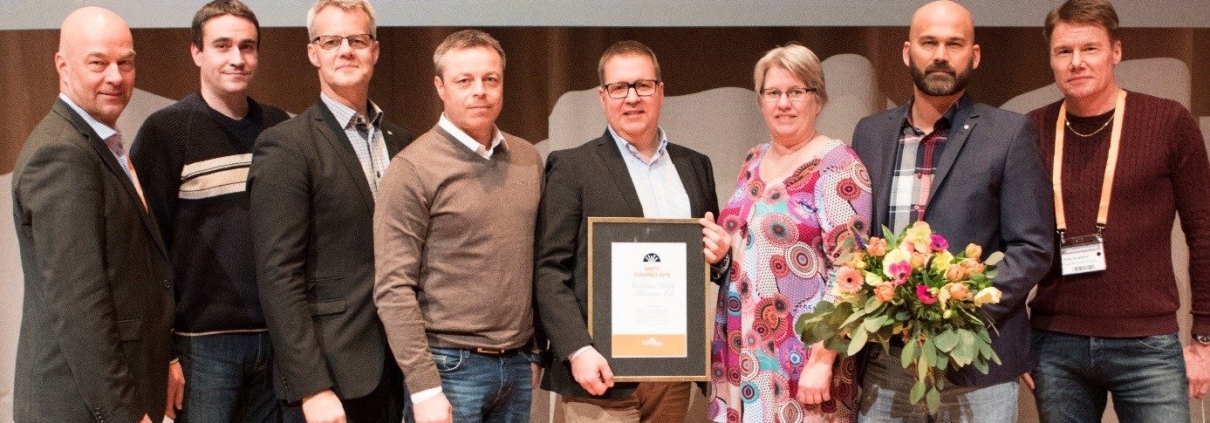
A unique product suite and the last years’ international successes were the main reasons why COS Systems was named winners in the category Best New Business at this year’s Umea Gala (Umeågalan).

COS Systems Team Triumphantly Holding the Best New Business Award at Umea Gala

Since 2004 the Umea Gala has recognized successful companies in COS System’s hometown Umea that are contributing positively to the city’s development and the local business community. This year the prize for Best New Business 2016, was won by COS Systems.

 “The best new business of the year is a company that enriches the business community of Umea with new ways of thinking. The winning company offers a unique product or service and has built a solid foundation for long term growth and success. The winner is a role model for others starting and growing their business. Other important factors are export outside of the city and country and the constant challenging of established ways of conducting business.”

“It’s always great to win and this prize is something we can all be very proud of,” says COS Systems CMO Isak Finer. “The entire COS team has worked very hard to develop, market and sell our unique solutions for Demand Aggregation (COS Service Zones) and Open Access Network Management (COS Business Engine). With the successes we’ve seen the past few years we all feel we are getting up to speed, but with our targets set very high the common feeling is that we’re just getting started. When you’re working hard every day it’s often difficult to take a step back and look at what you’ve achieved so far. This recognition made us do just that and we are very proud of the prize and what we have accomplished the past few years.”

“This prize might not have a great meaning to our international customers who probably have never even heard of Umea, but for us winning this prize is fantastic. We have a great team that has managed to take us to where we are today, with a truly unique product suite and customers soon in every corner of the world. But to keep the momentum going we need to grow our team. Backed by a state of the art fiber infrastructure our city boasts a very strong IT sector and there’s fierce competition to recruit developers and other competences we need. Winning this prize certainly puts us on the map. I hope and believe that this recognition will help us in recruiting the best talents,” says Peter Lidstrom, CEO.

About Umeågalan and Umeå

Umeågalan was founded in 2004 to recognize successful companies and entrepreneurs and their importance to the growth and development of the City of Umeå. The Gala has grown into the biggest and most important event for the city’s business community. It’s a place for entrepreneurs to meet and the vision of the event is that Umeå will offer the best opportunities for starting and growing new businesses in Sweden. Umeå is the largest city in the northern part of Sweden with 120,000 people. It is one of the fastest growing IT regions in the country with many successful startups and an inflow of new competency from one of Sweden’s largest universities with over 30,000 students.

About COS Systems

COS Systems is a leading provider of software to plan, deploy and manage modern broadband networks that support services from one or more providers, using a powerful yet simple self-service interface. COS Systems takes customer needs and delivers innovative software solutions that streamline operations, accelerate revenue and deliver more satisfied subscribers. Learn more about COS Systems on www.cossystems.com.

For additional information, contact:

Peter Lidstrom
Chief Executive Officer
COS Systems
+46 70 656 58 72
peter.lidstrom@cossystems.com
www.cossystems.com