Open Access featured image

Open Access featured image

Private providers just aren’t building fiber at a fast-enough pace today in the USA. Local leaders in an increasing number of communities are looking into options for how to save their residents from being left in the dark when our way of life and economy is moving online. This is especially true in rural areas where the private providers show no interest in investing since the return on investment isn’t good enough with low subscriber density and numbers. In other parts of the world publicly built fiber infrastructure is often operated with an Open Access Model and it is winning ground in the USA as well. But there is quite a lot of confusion about what the term means, so here is a walkthrough of the most common models with pros and cons of each. A hint to you who is reading this – read to the end, we save the best to last.

Introduction to Open Access

In short the Open Access model builds on the concept of layers.

  • The first layer is the Infrastructure layer, which is the conduit and physical cables that make up the network. It is also called the Passive
  • The second layer is the Operations layer, which is lighting up the physical network with electronics and making it all work. It is also called the Active
  • The third layer is the Services layer, which simply consists of all the services delivered over the network. People tend to think of the traditional Internet, Phone (VOIP) and TV (IPTV) services, but we see an increase in other services like telehealth, home security, IoT and other Smart services.

The idea is to separate these layers, so that one entity can own and maintain the Infrastructure layer and then lease it out for others to deliver services. Much like an airport works. One entity builds the airport and all the airlines pay when they use it. Imagine how ridiculous and expensive flying would be if every airline had to build their own airports! That is how telecommunications generally work today.

What people have questions about is generally the operations layer. What does it really mean? Well, let’s compare all the data flowing into and out of the network to water. If it was important to get the right stream of water to a specific house all the way from the water tower, the only practical way would be to build a separate pipe all the way to that house. That is basically what happens in the operations layer. Using controller software, you create a tunnel through the network to every single end user, in which the service is delivered. This is what every service provider does when they start up a new service, but in the scenario with a single provider they typically make no significant difference between the operations and the services layer. That separation is important when multiple service providers can have their own tunnels and you need to keep track of who has which tunnel set up.

With that introduction given it is time to start listing some of the most common Open Access models used today. Please note that there is no standardized vocabulary, which is the reason why this blog post is written in the first place! You might find other names for these models. Also, this has the outlook of a municipality building a publicly owned fiber infrastructure. The assumption is also that it’s a positive thing to give consumers multiple choices for services and providers. Private service providers are in this business to make money, which can obviously make them have a different opinion on some of this.

Dark fiber Open Access

In networks you talk about backbone, middle mile and last mile. If comparing to a road system the backbone would be the highways, connecting cities to each other. The middle mile would be all the small streets within the city, and the last mile, or the “drop”, are the driveways at peoples’ houses. Without a backbone your city would have no means of effectively reaching the rest of the world’s network and without the middle mile the houses would have nothing to connect to. In the Dark fiber model, the community is only providing the passive infrastructure layer and they allow private providers to lease access to it and use it as they wish.

Dark fiber backbone Open Access

In this model the community would pay for the highway into the city, ensuring there is capacity enough for private service providers to sell high quality services.

Pros

  • The minimum investment needed to likely improve broadband quality
  • No need for knowledge in network operations
  • No need to invest in electronics
  • Might reduce the cost enough for private providers to start investing in the community

Cons

  • There is no guarantee a provider will build out
  • If a provider builds, they will likely only build where the business case is the best and leave some residents without
  • Since the final connection to the end customers will be built by private providers, the community will have to reach agreements for using their infrastructure in order to deliver community services (smart services), which will also not reach all residents (see above).
  • Customers will in reality have no choice. The investment done by the first provider in middle mile and last mile is too much of a barrier for a new provider to come in. Overbuilding is very uncommon in fiber. The common monopolistic problems of high price and sometimes low quality are likely.

Dark fiber middle mile Open Access

The community would also build the fiber in the streets and then allow private providers to bring the electronics to light up services and build the drops to the houses.

Pros

  • With almost all of the investment done , it’s very likely private providers will start investing in the community
  • If all streets have fiber, even the weaker areas of town could be connected
  • No need for knowledge in network operations
  • No need to invest in electronics

Cons

  • The provider will likely only build to residents with stronger economy since they have profit targets to reach and don’t want customers who might be bad payers.
  • Since the final connection to the end customers will be built by private providers, the community will have to reach agreements for using their infrastructure in order to deliver community services (smart services), which will also not reach all residents (see above).
  • Customers will in reality have no choice. The investment done by the first provider in last mile is too much of a barrier for a new provider to come in. Overbuilding is very uncommon in fiber. The common monopolistic problems of high price and sometimes low quality are likely.

Dark fiber last mile Open Access

In this model the community builds all of the fiber, but they lease it to a private provider/s who would install the electronics, operate the network and sell services.

Pros

  • With all of the investment in fiber done , private providers will definitely start lighting up customers
  • If all properties have a fiber connection, even the weaker areas of town could be connected
  • No need for knowledge in network operations
  • No need to invest in electronics

Cons

  • The provider will likely only invest in and install equipment to residents with stronger economy since they have profit targets to reach and don’t want customers who might be bad payers.
  • Even though the final connection to the end customers is owned by the city, the community will still have to reach agreements for using that infrastructure in order to deliver community services (smart services), as private providers own the electronics and thereby control the network.
  • Customers will in reality have reduced choice. The investment done by the first provider in electronics to serve a specific area and investment in electronics at the customers home, will be prohibitive for a new provider to come in. The common monopolistic problems of high price and sometimes low quality are likely to still exist.
  • In order to enable multiple providers to coexist, you need multiple fibers and also enough space in huts, handholes, and such to house multiple providers electronics.
  • The total cost will be higher since electronics will not be utilized to a maximum (two providers in the same area might have their own switches, which are both not used to a maximum.

Lit Open Access – Single provider

In this model the community would build the entire fiber network and also invest in the electronics all the way to the ONT in the customers’ homes and also build up operations capacity (an alternative is to lease the network or hire a neutral operations company to light and operate the network). Service providers are invited to resell services that are offered to them by the operator on wholesale terms which are equal to all providers. The service providers would still own and bill their customers. In this model the customer can freely choose between providers, but only have one provider at a time.

Pros

  • With all of the investment in fiber and electronics done, there is a very small hurdle for providers to start selling services on the network. Selling services goes from CAPEX intensive to an OPEX game.  
  • If the ONT is installed by the community network, the investment for providers is almost none and even the weaker areas of town could be serviced by private providers.
  • The common monopolistic problems of high prices and low quality of service will be reduced since customers can change providers if unhappy.
  • The assortment of services with multiple providers will probably be larger.
  • Lower prices, higher quality and bigger assortment will improve take-rates and both revenue and other benefits of a higher utilization will increase
  • The city now owns the entire network and can freely roll-out smart city services and decide which providers of other IoT and smart city services are welcome to deliver services on the network.
  • Investments in electronics is kept to a minimum, since new hardware will only be installed when needed. (never two half full switches from two different providers in the same rack.)

Cons

  • This is the largest investment a community could do (an option would be to invite a neutral operations partner who could bring the electronics and/or operate the network).
  • If doing their own operations, the city would have to build an operations organization.
  • Customers will have choice of providers, but not full freedom to choose what they like from multiple providers at the same time, which reduces the value of the network greatly since not all providers will be fit to deliver the services of the future.

True Open Access (Lit Open Access – Multiple providers)

The difference between the previous model and the True Open Access model is that the customer can freely choose between not only providers, but even on a service by service level. They have the freedom to build exactly the bundle of services from any number of providers that suits them best. This means maximum power to the consumer, an open and level playfield for any kind of provider and no restrictions for introduction of future services.

Pros

  • With all of the investment in fiber and electronics done, there is a very small hurdle for providers to start selling services on the network.
  • With the ONT being installed by the community network, the investment for providers is almost none and even the weaker areas of town could be services by private providers.
  • The common monopolistic problems of high prices and low quality of service will be reduced since customers have full choice of providers and services.
  • The assortment of services with multiple providers will be larger and providers who aren’t selling the traditional internet service can also come on the network since customers can buy services from multiple providers at the same time.
  • Lower prices, higher quality and bigger assortment will improve take-rates, and both revenue and other benefits of a higher utilization will increase
  • The city now owns the entire network and can freely roll-out smart city services and decide which providers of other IoT and smart city services are welcome to deliver services on the network.
  • Investments in electronics is kept to a minimum, since new hardware will only be installed when needed. (never two half full switches from two different providers in the same rack.)

Cons

  • This is the largest investment a community could do (an option would be to invite a neutral operations partner who could bring the electronics and/or operate the network).
  • If doing their own operations, the city would have to build an operations organization.

The True Open Access model is obviously the most complex to operate, but also the one that has no built-in restrictions. With this model you as a community are in full control of your digital future. What you need is a software platform that was built ground-up to support this business model.

COS Business Engine is the platform we launched in 2008 to automate the operations of True Open Access Networks. It is today used to Operate around 150 True Open Access Networks Worldwide, big and small.

For additional information contact:

Isak Finér
CMO & VP North America
COS Systems
+1 (540) 988-3224
isak.finer@cossystems.com
www.cossystems.com

Umeå Energi bidrar till gemenskapens anslutning med en rad av hus i ett bostadsområde, symboliserar potentiell bredbandsutbyggnad.

Umeå Energi har med en hög utbyggnadstakt kraftigt expanderat sitt stadsnät i Umeåregionen. Med ett allt större fibernät, fler aktiva kunder och ny teknik som introduceras så har Umeå Energi valt att förnya avtalet med COS Systems för deras fortsatta användande av COS Business Engine som operatörsplattform för driften av nätet.

Det kommunalägda energibolaget Umeå Energi var väldigt tidigt ute med fiber och utbyggnaden av stadsnätet Umenet påbörjades redan under 90-talet. På senare år har utbyggnadstakten varit fortsatt hög och även antalet kunder i sedan tidigare utbyggda områden som nu valt att ansluta sig har vuxit kraftigt i takt med att behovet av bredbands­uppkoppling av hög kvalitet blir en allt mer central del av svenskarnas vardag. Äldre tekniker för att leverera Internet blir allt mer utdaterade.

Umenet har sedan 2012 använt mjukvaran COS Business Engine. Systemet omfattar allt från kundportalen där kunderna kan välja tjänster från 15 olika leverantörer, till de administrativa och tekniska funktionerna som automatiserar allt från aktivering av bredbandstjänster och fakturering av leverantörerna.  

“Med den kundtillväxt vi sett de senaste åren och med introduktionen av nya tjänster i nätet och användningsområden för vår fiberinfrastruktur var det läge att omarbeta vårt avtal med COS Systems. Med detta uppdaterade avtal på plats är vi redo för fortsatt framtida tillväxt med stöd av COS och deras effektiva driftsplattform,” säger Mats Berggren, VD på Umeå Energi Umenet.

Bland mycket annat så arbetar Umeå Energi med ett mycket intressant projekt där Sveriges första 5G-nät utvecklas i samarbete med Ericsson, Telia, Umeå Universitet, Umeå Kommun, Umeå Science Park samt andra lokala aktörer. Ett ytterligare innovativt initiativ är Smart Start, vilken är en pilot på Smarta-hem- och IoT-tjänster (Internet of Things), som kan levereras över deras öppna stadsnät.

”Det uppdaterade avtalet med Umeå Energi är viktigt för oss. Vi ser det som bevis för att vårt system inte bara skapar förutsättningar för en snabb kundtillväxt, utan även är en effektiv plattform för framtida expansion. Umeå Energi är en innovativ och framtidsinriktad kund och vårt fortsatta samarbete kommer bidra till att våra produkter utvecklas för att än bättre möta de krav som framtidens tekniska lösningar ställer”, säger Peter Lidström, VD på COS Systems.

Om Umeå Energi

Umeå Energi är ett energibolag och en samhällsaktör som i nära samarbete med omvärlden utvecklar och levererar hållbara energi- och kommunikationslösningar. Vår vision är en enklare vardag för våra kunder och en hållbar framtid för regionen. Vi omsätter ca 1,4 miljarder kronor, har drygt 400 medarbetare och är både miljö- och arbetsmiljöcertifierade.

Om COS Systems

COS Systems är en globalt verksam leverantör av mjukvara för att planera, bygga ut och sköta driften av moderna bredbandsnät. COS Systems utgår från kundbehov och utvecklar innovativa mjukvarulösningar som effektiviserar den dagliga driften, bidrar till ökad försäljning och nöjdare kunder. COS Systems expanderar ständigt och har hittills sina kunder i Europa, Nord- och Sydamerika, Afrika och Asien. Läs mer om COS Systems på www.cossystems.com

För ytterligare information, kontakta:

Mats Berggren
VD, Umea Energi Umenet AB
070 – 518 71 28
Mats.berggren@umeaenergi.se
www.umeaenergi.se

Peter Lidström
VD, COS Systems AB
070 – 656 58 72
Peter.lidstrom@cossystems.com
www.cossystems.com


The Electric Utility Umea Energi has expanded their fiber network significantly during the last years. With a larger footprint and new technologies emerging they have chosen to renew their contract with COS Systems for their continuous use of COS Business Engine for efficient operations and automated service activations of their Open Access fiber network.  

[Umea, Sweden] Umea Energi is a municipally owned electric utility in the University town of Umea, Sweden. It first started building out the fiber optic network in the 90’s, but has increased the pace in their build-out in the last five years, while the take-rates have also improved greatly as consumers need for reliable high-speed data increases. Older technologies to connect to the internet are becoming obsolete.

The Utility has been using COS Business Engine as their BSS/OSS (Business and Operations Support System) since 2012. The system consists of everything from the online Marketplace where subscribers can choose services from 15 different service providers to the administrative backend system that automates everything from service activation to wholesale billing.

“With the growth we have seen in the last years and the new applications we are now introducing in our network we needed to rework our original agreement with COS. With this updated agreement in place we are ready for the future of our network with the support of COS Systems and their highly efficient operations platform,” says Mats Berggren, CEO of Umea Energi Umenet.

Umeå Energi is currently working on Sweden’s first 5G deployment in cooperation with Ericsson, Telia, Umea University and other municipal entities. They are also doing a pilot project called Smart Start, which is a platform for delivery of smart home services to residents.

“This updated agreement with Umea Energi is important for us at COS. We have proven that our system enables and supports network growth and that it will also be the platform to effectively operate Open Access Networks in the future. Umea Energi is an innovative and forward thinking customer and our ongoing cooperation will be valuable for the continuous development of our products,” says COS Systems CEO Peter Lidstrom.

About Umeå Energi

Umeå Energi is an energy company that in close cooperation with the world around us develops and provides sustainable solutions for energy and communication services. We strive to challenge through new thinking and to drive the sustainable development in the Umeå region. Our vision is to make everyday life simpler for our customers and to secure a sustainable future for the region. Our turnover is approximately SEK 1.4 billion, we have just over 400 employees and hold environmental as well as work environment certifications. umeaenergi.se

About COS Systems

COS SYSTEMS is a leading provider of software to plan, deploy and manage Open Access networks, using a powerful yet simple self-service interface. COS Systems takes customer needs and delivers innovative software solutions that streamline operations, accelerate revenue and deliver more satisfied subscribers. Learn more about COS Systems on www.cossystems.com.

For additional information contact:

Mats Berggren
CEO
Umea Energi Umenet AB
Mats.berggren@umeaenergi.se
www.umeaenergi.se

Isak Finer
CMO & VP North America
COS Systems
isak.finer@cossystems.com
www.cossystems.com


COS Systems is ramping up after summer and we are happy to have strengthened the team with two more rock stars.

Boris Ruiz started in our Product Development team in August. He is a Swedish-American born in Florida, moving in between Miami and Puerto Rico. From an early age he developed an interest in software, working on hobby projects in his free time such as apps, games, & websites. Being an adventurous person by nature and not afraid to try and learn new things, he recently decided to move to Sweden to see how life is like here. At COS we were lucky to snatch this amazing developer before any of the other IT companies in our city did. Boris is currently mainly working on improvements to our COS Service Zones product. With our focus on the US market it’s an obvious plus his native tongue is English, but we are worried he will soon forget it based on the speed at which he is picking up Swedish!

Simon Fransson has just done his first week on our QA team. Simon is from outside of Umeå but now has walking distance to our office – we’re all jealous. The last three years Simon spent at A3, which is one of Sweden’s largest service providers, active on more than 150 Open Access networks nationwide. Since most of these networks are operated using our COS Business Engine platform he already knows the ins and outs of it. It’s a great resource to have him on the team with the service provider perspective he brings when testing our products making sure they meet our ambitious quality standards. When Simon is not working or at the gym there’s a great chance he is gaming, something he’s been doing almost before he could walk. You do not want to meet this guy online in Counter Strike!

We’re excited to have them on our team and know they will both contribute greatly to our customers’ success.

Map of Town with Fiber Network Solutions

Last updated: April 2026 | By Isak Finér, CRO, COS Systems

Demand aggregation is a pre-construction technique that fiber operators use to validate market demand before committing capital to a build. Operators define a service area, gather resident commitments, and proceed with construction only when a target take rate is reached. COS Systems has supported more than 100 demand aggregation campaigns across the United States since 2013.

What is demand aggregation for fiber networks?

Demand aggregation is the practice of measuring and organizing resident interest in fiber broadband before a network is built. Rather than constructing first and recruiting subscribers afterward, operators define geographic areas, run structured signup campaigns, and use the resulting commitment data to make build decisions.

The approach reduces construction risk and improves long-term take rates by ensuring capital flows to areas where demonstrated demand already exists.

Why do fiber operators use demand aggregation instead of building speculatively?

Speculative fiber builds — where construction precedes organized subscriber recruitment — can take a decade or more to reach sustainable take rates. In rural and underserved communities, that timeline often makes the business case untenable.

Demand aggregation collapses that timeline by organizing existing demand before construction begins. Early cash flow from committed subscribers in the first buildout areas can fund expansion into harder-to-reach neighborhoods. For community-owned and open access networks, where the long-term goal is universal coverage, this staged approach is particularly important.

How does a demand aggregation campaign work?

A demand aggregation campaign typically runs in four phases.

The first is a survey phase, in which residents provide non-binding input on their current internet service and interest in fiber. Once interest reaches a defined threshold, the campaign advances.

In the signup phase, residents commit to connection terms. Operators may collect deposits at this stage to reduce financial risk and filter for genuine intent.

During construction, proactive communication is critical. Residents want clarity on timelines, installation procedures, and property impact. Targeted communication throughout this phase reduces churn between commitment and activation.

Once the network is live, connected customers are directed to the customer portal to select services. Residents who did not sign up during the campaign receive late-adopter outreach.

What role do local champions play in a demand aggregation campaign?

Community champions are residents who advocate for the fiber project within their neighborhoods. They apply digitally, are approved by the operator, and receive referral tools to recruit neighbors.

The champion model converts the community into a distributed sales force. Champions reach residents that traditional outreach misses — people who respond to a familiar face, not a corporate mailer. Campaigns with active champion networks consistently achieve higher take rates than those relying solely on operator outreach.

What have 100+ demand aggregation campaigns revealed?

After more than a decade supporting demand aggregation campaigns across the US, several patterns are consistent.

Small areas outperform large ones. Campaign areas of 50–100 homes are easier to manage, communicate around, and deliver stronger early take rates than broad geographic sweeps.

Early buildouts serve as proof points. Completing a small initial area quickly — and visibly — converts skeptics in adjacent areas and accelerates signups in subsequent phases.

Clear, professional communication throughout the campaign matters as much as the initial outreach. Residents who feel informed stay committed through construction delays. Those who do not, cancel.

How does demand aggregation evolve into demand generation?

Demand aggregation captures existing interest. Demand generation creates new interest where it did not exist.

Operators who run well-structured campaigns with strong champion networks, clear communication, and visible early results find that awareness spreads beyond the original campaign area. Residents in adjacent neighborhoods inquire before being canvassed. The community becomes an active participant in the network’s growth rather than a passive market to serve.

At that point, the operator is no longer aggregating demand — they are generating it.

For field sales workflows that extend demand aggregation into structured door-to-door canvassing, order creation, and take-rate tracking, see COS Prospector. For the BSS/OSS platform that converts demand data into build decisions, see COS Business Engine.

Frequently Asked Questions

What is demand aggregation in fiber broadband?

Demand aggregation is a pre-construction technique where fiber operators define service areas, gather resident commitments, and proceed with construction only when a target take rate is reached. It reduces financial risk by ensuring demand is validated before capital is deployed.

How long does a demand aggregation campaign take?

Campaign duration varies by area size, population density, and outreach intensity. Survey phases typically run four to eight weeks. Operators generally plan for two to four months from campaign launch to a build decision, with construction following once the threshold is met.

What take rate do fiber operators typically target before building?

Take rate targets depend on operator type and financing model. Open access and community-owned networks often target 35–50% pre-signup commitment to satisfy lender or governance requirements. Commercial operators may proceed at lower thresholds in denser markets. The right target is set by the operator’s unit economics, not a universal standard.

What is the difference between demand aggregation and demand generation?

Demand aggregation organizes existing interest. Demand generation creates new interest through outreach, education, and community engagement. Successful campaigns often evolve from aggregation into generation as early buildouts create visible proof points and word-of-mouth spreads beyond the original campaign area.

How does COS Systems support demand aggregation?

COS Systems supports demand aggregation through COS Business Engine, which manages service areas, resident signups, commitment tracking, and communication workflows. COS Prospector extends this into structured field sales: territory mapping, door-to-door canvassing, and in-field order creation. Business Engine validates and tracks demand; Prospector works it.

Can demand aggregation work in rural or underserved areas?

Yes. The technique originated for rural and community-driven fiber builds where speculative construction was financially unsustainable. The champion model is particularly effective in tight-knit communities where neighbor-to-neighbor outreach outperforms mass marketing.

COS Systems Strengthens US Presence

COS Systems Strengthens US Presence

After many successful years of growth in the US market COS Systems strengthens their presence further by appointing Isak Finer as Vice President for their North American business.

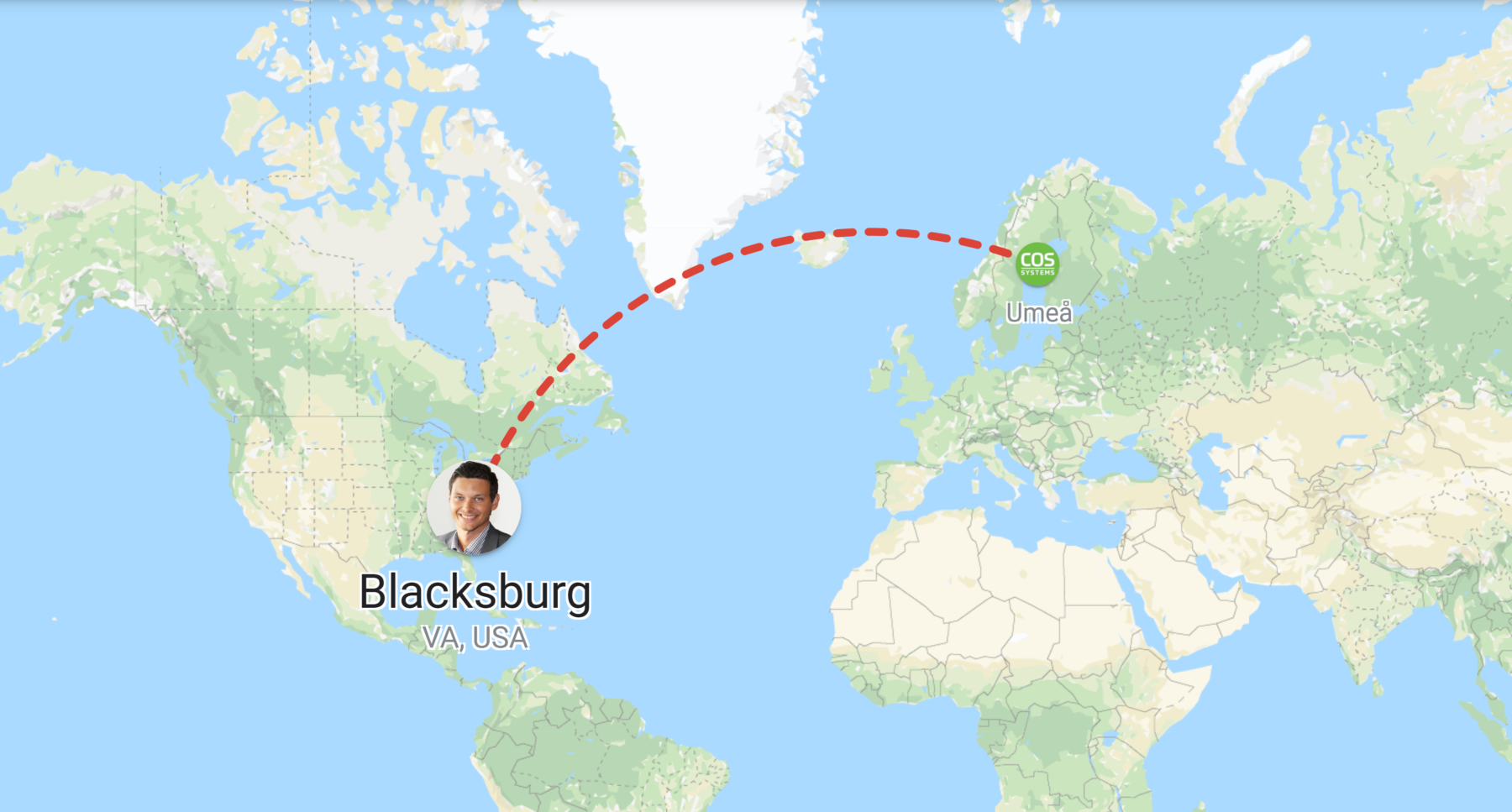
[Blacksburg, VA] COS Systems began its expansion into the US Market six years ago. Since then, more than one hundred North American clients have signed up to the two software platforms COS Service Zones and COS Business Engine. With increasing demand for their products and the growing interest among US communities to build True Open Access networks COS has decided to appoint Isak Finer, the company’s CMO, as Vice President of North America. Finer is now permanently based in Blacksburg, Virginia.

“Breaking into a new market is a big undertaking, especially a market as large and competitive as the United States. With the recent years’ successes and our strong financial performance, we feel it is time to take the next step and start building a team permanently based in the United States,” says Peter Lidstrom, COS Systems CEO.

With large projects on the horizon the timing is now right to invest in a stronger local presence and an organization dedicated to the United States.

“I am very happy about the move to the States. Being closer to our clients and partners makes it easier for us to deliver our very best. I look forward to continue building on existing relationships and adding more companies to our family of fantastic customers,” says Isak Finer, COS Systems CMO and VP North America.

“It is a milestone in the company’s history to appoint a US based Vice President and a receipt of the increasing success we have seen. We are now positioned to take on more customers and larger projects,” concludes Goran Bergling, Charmain of the Board at COS.

About COS Systems

COS SYSTEMS is a leading provider of software to plan, deploy and manage Open Access networks, using a powerful yet simple self-service interface. COS Systems takes customer needs and delivers innovative software solutions that streamline operations, accelerate revenue and deliver more satisfied subscribers. Learn more about COS Systems at www.cossystems.com.

For additional information contact:

Isak Finér
CMO & VP North America
COS Systems
+1 (540) 988-3224
isak.finer@cossystems.com
www.cossystems.com

ISE EXPO 2019 COS SYSTEMS

ISE EXPO 2019 COS SYSTEMS

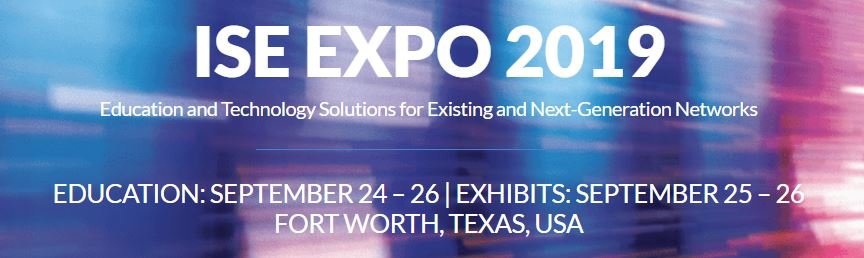
Are you a telecom/ICT professional and looking to keep up to date with the latest network technologies and solutions? Then make sure to join us in Fort Worth, Texas next week, September 24-26, 2019 at the Fort Worth Convention Center.

ISE EXPO is the ICT industry’s premier educational event for wireline and wireless network transformation. From construction and engineering products to SDN and NFV technologies, we deliver what you need. Discover why network professionals from around the globe attend for engaging seminars, live demo zone, commanding keynotes, hands-on workshops and face-to-face networking.

Get hands on with leading-edge technologies, meet with vendors, and connect with network professionals and telecom thought leaders who are tackling challenges, exploring opportunities and developing innovative solutions for the industry’s massive transformation.

Contact our team before the event to set up a meeting or stop by booth #929.

About COS Systems

COS SYSTEMS is a leading provider of software to plan, deploy and manage modern broadband networks that support services from one or more providers, using a powerful yet simple self-service interface. COS Systems takes customer needs and delivers innovative software solutions that streamline operations, accelerate revenue and deliver more satisfied subscribers. Learn more about COS Systems on www.cossystems.com.

For additional information contact:

Isak Finér
CMO & VP North America
COS Systems
+1 (540) 988-3224
isak.finer@cossystems.com
www.cossystems.com
COS Systems AB AAA highest credit worthiness 2019

COS Systems AB AAA highest credit worthiness 2019

COS Systems has this year achieved the highest credit rating AAA given by Bisnode. This rating places COS Systems among the top 2.3% of Joint-Stock Companies in Sweden that currently have the AAA rating. Receiving the AAA rating testifies to COS Systems position globally and indicates that the company is high-performing, trustworthy and reliable to its customers and partners.

“We are extremely proud of this achievement. We are constantly striving to enhance our trust towards our customers and partners globally and are happy to have the AAA rating from Bisnode further acknowledging the stability of our company.” Says Peter Lidstrom, CEO at COS Systems

The AAA rating from Bisnode has been used since 1989 and is today the most well know credit rating system in Sweden. Bisnode derives its information from a number of official and confirmed sources. This information is then analyzed according to 2,400 rules resulting in a value in the rating model. They gather data daily from reliable sources. Read more. About COS Systems COS Systems is a leading provider of software to plan, deploy and manage Open Access fiber networks, using a powerful yet simple self-service interface. COS Systems takes customer needs and delivers innovative software solutions that streamline operations, accelerate revenue and deliver more satisfied subscribers. Learn more about COS Systems on www.cossystems.com. For additional information contact: Isak Finér Chief Marketing Officer COS Systems +46737 51 99 38 isak.finer@cossystems.com www.cossystems.com